National Park
Kaziranga National Park
Kaziranga, on the floodplains of the Brahmaputra, is home to the world's largest population of greater one-horned rhinoceros and is a UNESCO World Heritage Site (1985).
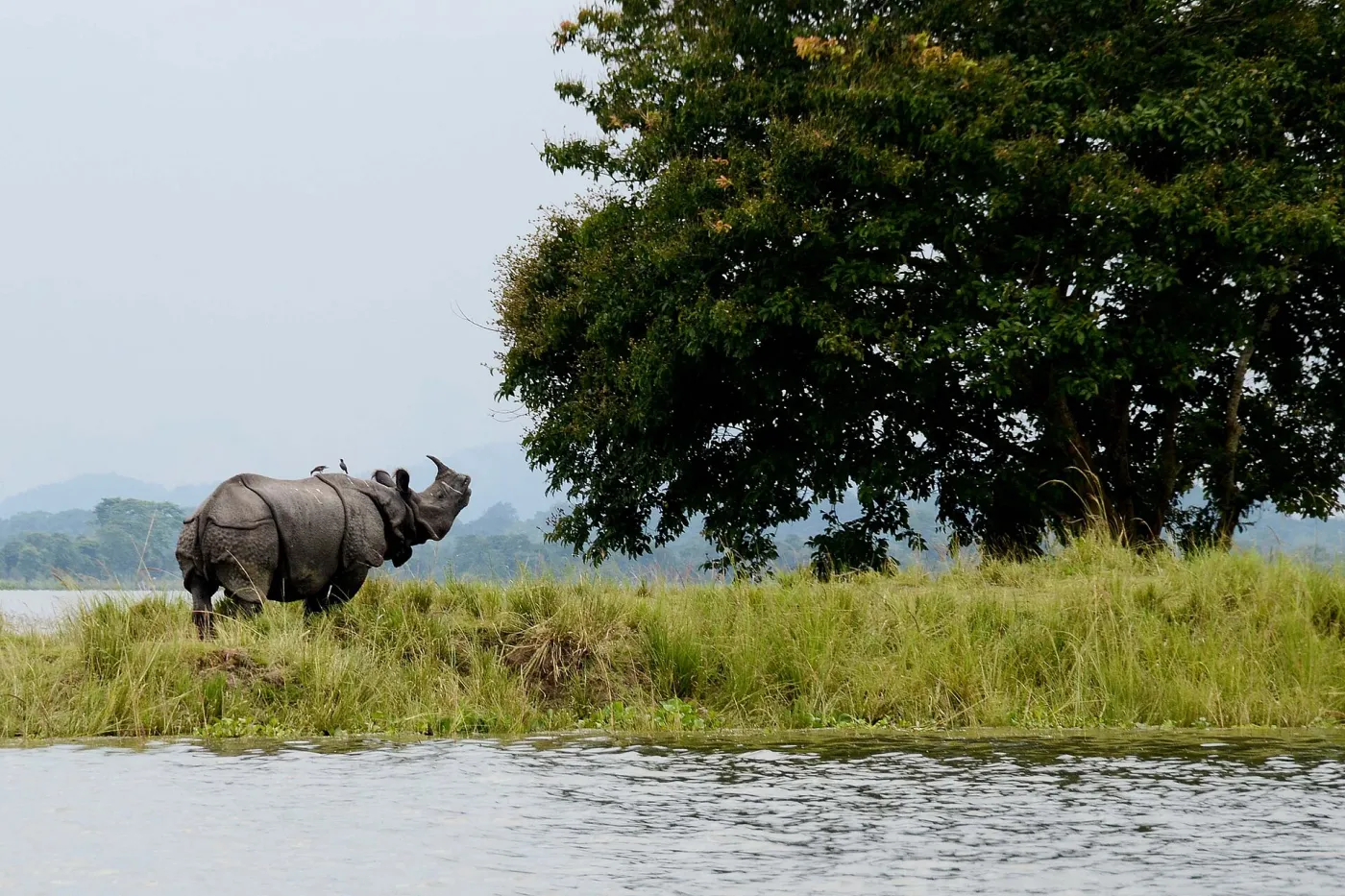
Kaziranga lies on the southern bank of the Brahmaputra in Assam, a landscape of tall elephant grass, shallow lakes and patches of forest that floods every monsoon. It is best known for protecting the world's largest population of the greater one-horned rhinoceros, rescued from the brink of extinction in the early 20th century.
The park also has some of the highest densities of tigers in India, along with Asian elephants, wild water buffalo and eastern swamp deer. It was declared a national park in 1974, inscribed as a UNESCO World Heritage Site in 1985 and made a tiger reserve in 2006. Wildlife corridors to the Karbi Anglong hills are vital for animals escaping the annual floods.