Southern Asia
India
Official name: Republic of India (Bharat Ganarajya)
Reported
Last updated 11 Oct 2026
India is the largest country in South Asia and one of the world's most populous nations, a federal republic of 28 states and 8 union territories with a history stretching back to the Indus Valley Civilisation.
Capital
New Delhi
Area
3,287,263 km²
Population
1,210,854,977
Reference year 2011 · Census of India 2011
Density
368.3 /km²
Calculated from the figures shown
States & UTs
36
Currency
Indian rupee (₹)
INR
Calling code
+91
Internet domain
.in
Time zone
Indian Standard Time (UTC+05:30)
UNESCO World Heritage Sites
44
As of July 2025
Overview
India occupies most of the Indian subcontinent, bounded by the Himalaya in the north and by the Arabian Sea, the Indian Ocean and the Bay of Bengal to the west, south and east. It is a federal union of 28 states and 8 union territories, each with its own administrative history, languages and cultural traditions.
The Constitution of India came into force on 26 January 1950, establishing a parliamentary system with a President as head of state and a Prime Minister as head of government. Parliament has two houses: the Lok Sabha (House of the People), with 543 elected constituencies, and the Rajya Sabha (Council of States), whose members are elected mainly by the state legislatures.
This profile collects key facts about India – population, area, languages, national symbols, states and union territories, geography and heritage – with the source and reference year shown for every statistic.
States & UTs of India
Full listMost populous states & uts
Source years: 2011. Compare all states & uts.
Geography
India's landscape ranges from the glaciated peaks of the Himalaya and Karakoram to the fertile Indo-Gangetic Plain, the Thar Desert in the north-west, the ancient Deccan Plateau in the peninsula, and the Western and Eastern Ghats that frame it. Island groups include the Andaman and Nicobar Islands in the Bay of Bengal and Lakshadweep in the Arabian Sea.
Major river systems include the Ganga, Yamuna and Brahmaputra in the north and east, and the Godavari, Krishna, Kaveri, Narmada and Mahanadi in the peninsula.
Climate
India's climate is strongly shaped by the monsoon. Most of the country receives the bulk of its rainfall from the south-west monsoon between June and September, while parts of the south-east coast also receive rain from the north-east monsoon later in the year. Conditions range from alpine in the Himalaya to arid in the Thar Desert and tropical in the south.
Major rivers, mountains & protected areas
National symbols
| Symbol | Name | Status |
|---|---|---|
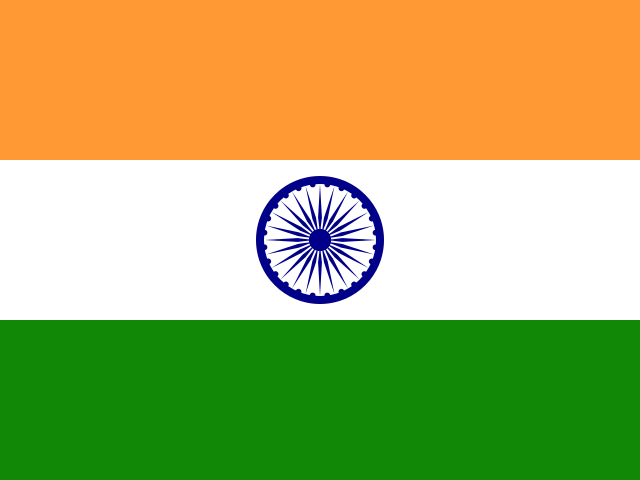
| Flag | National Flag (Tiranga) | Officially designated |
| Emblem / Coat of Arms | State Emblem of India | Officially designated |
| Anthem | Jana Gana Mana | Officially designated |
| Song | Vande Mataram | Officially designated |
| Animal | Tiger Panthera tigris |
Officially designated |
| Bird | Indian Peafowl (Peacock) Pavo cristatus |
Officially designated |
| Flower | Lotus Nelumbo nucifera |
Officially designated |
| Tree | Banyan Ficus benghalensis |
Officially designated |
| Aquatic Animal | Ganges River Dolphin Platanista gangetica |
Officially designated |
| Heritage Animal | Indian Elephant Elephas maximus indicus |
Officially designated |
| River | Ganga | Officially designated |
| Calendar | Saka Calendar | Officially designated |
| Fruit | Mango Mangifera indica |
Popular cultural association (not official) |
History
The Indian subcontinent has been home to some of the world's earliest urban societies, including the Indus Valley (Harappan) Civilisation. Over the following millennia it saw the rise of major empires and kingdoms, the growth of several world religions, and centuries of trade and cultural exchange across Asia.
After a long period of colonial rule, India became independent on 15 August 1947 and adopted its Constitution on 26 January 1950, which is celebrated as Republic Day.
Culture & heritage
India is home to an extraordinary variety of languages, faiths, cuisines, music, dance and crafts. Festivals such as Diwali, Holi, Eid, Christmas, Pongal, Onam, Durga Puja and many regional celebrations are observed across the country.
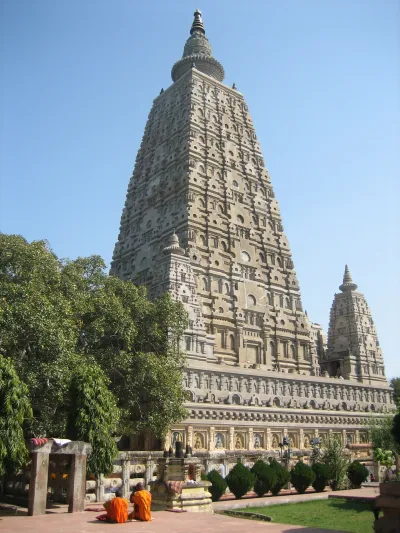
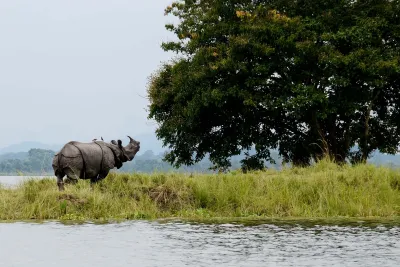
Tourism & heritage
All destinations

Frequently asked questions
How many states and union territories does India have?
India currently has 28 states and 8 union territories. The most recent changes were the reorganisation of Jammu and Kashmir into two union territories in 2019 and the merger of Dadra and Nagar Haveli with Daman and Diu in 2020.
What is the capital of India?
New Delhi is the capital of India. It lies within the National Capital Territory of Delhi.
What is the population of India?
The last completed census (2011) counted 1,210,854,977 people. Later figures published by international organisations are estimates; StateIcon shows the reference year with every population figure.
What is India's PIN code system?
PIN codes are six-digit postal codes introduced by India Post in 1972. You can search them in the StateIcon PIN code directory once the official dataset has been imported.
Sources & references
- Census of India 2011 – Primary Census Abstract – Office of the Registrar General & Census Commissioner, India (2011) , retrieved 10 Oct 2026 – Population and area Reported
- National Portal of India – Know India – Government of India , retrieved 10 Oct 2026 – National symbols, states and union territories Reported
- UNESCO World Heritage List – India – UNESCO World Heritage Centre (2025) , retrieved 10 Oct 2026 – Number of World Heritage Sites Reported
Articles about India
All articles
National and State Symbols
National Symbols of India: Which Are Official?
India's national flag, emblem, anthem, animal, bird, flower and more – and why some popular “national symbols” have neve...
Indian States and Union Territories
States and Union Territories of India: A Complete Guide
How India is organised into 28 states and 8 union territories, how the two differ, and how the map has changed since 194...