Temples and Religious Heritage · Madhya Pradesh, India
Khajuraho Group of Monuments
The temples of Khajuraho, built mainly under the Chandela dynasty, are renowned for their architecture and sculpture.
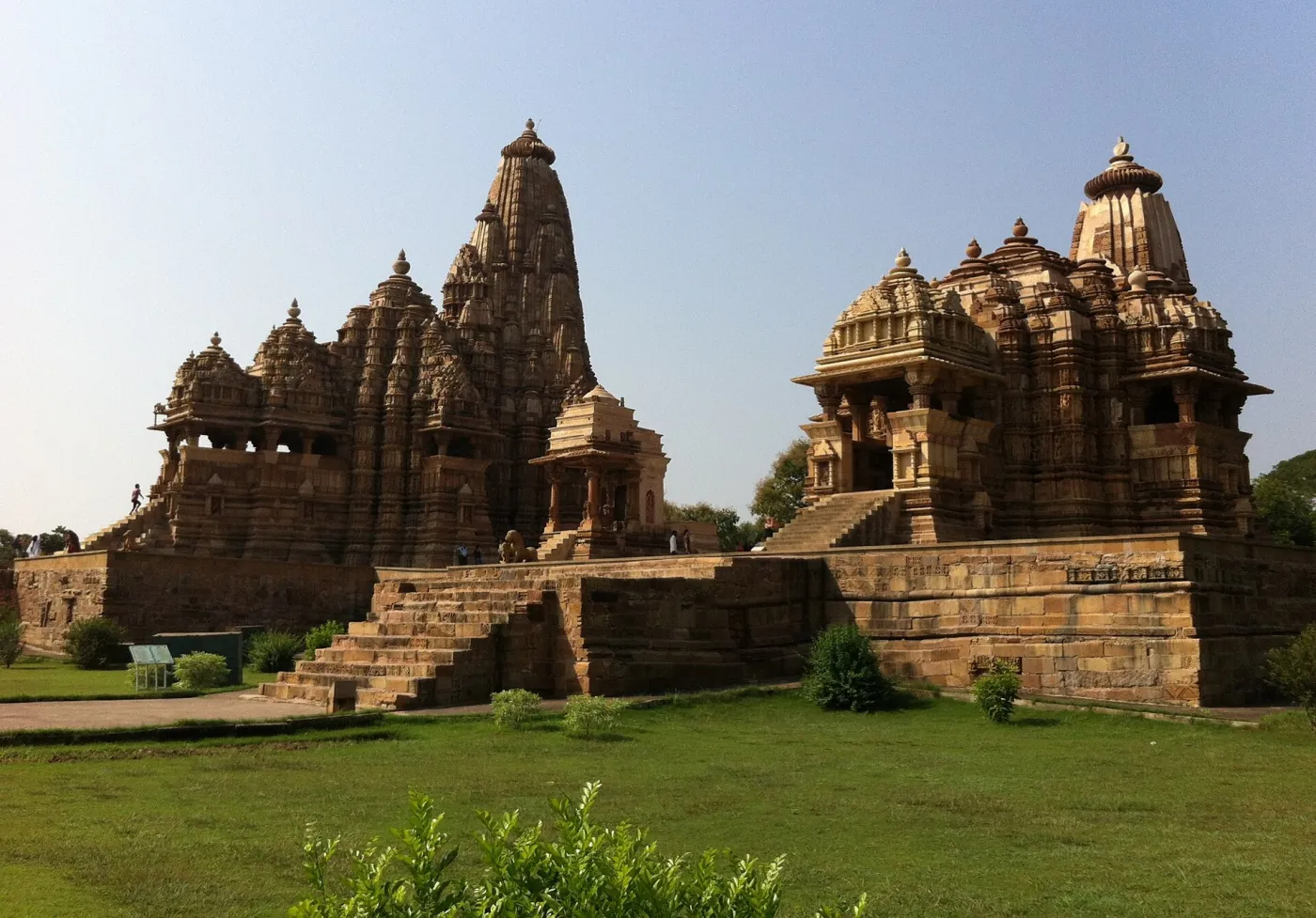
Overview
In a quiet corner of Madhya Pradesh, a cluster of sandstone temples rises from green lawns, their towers (shikharas) climbing like mountain peaks. Walk closer and every surface comes alive with sculpture: gods and goddesses, musicians, warriors, animals, and graceful celestial women caught in everyday moments – applying make-up, writing letters, playing with a ball.
The Western Group, including the Kandariya Mahadeva, Lakshmana and Vishvanatha temples, holds the finest examples, while the Eastern and Southern groups include Jain temples and smaller shrines. The evening sound-and-light show narrates the story of the Chandela kings who built them.
History
The temples were built by the Chandela dynasty mainly between about 950 and 1050 CE. Of the many temples once standing, around 25 survive today. Remote from major cities, they escaped much destruction and were brought to wider attention in the 19th century. The Khajuraho Group of Monuments was inscribed as a UNESCO World Heritage Site in 1986.
Significance
Khajuraho represents the high point of the Nagara style of North Indian temple architecture. Its sculpture, including a small number of famous erotic panels, reflects a confident medieval culture that celebrated all aspects of life.
How to reach
Khajuraho has its own airport with flights from Delhi and Varanasi, and a railway station connected to Delhi and Jhansi. Jhansi, about 175 km away, is a common rail gateway. The Western Group is within walking distance of most hotels.
Frequently asked questions
Who built the Khajuraho temples?
How many temples survive?
Sources & references
- UNESCO World Heritage List – UNESCO World Heritage Centre (1986) , retrieved 10 Oct 2026 – Inscription year Reported