River
Brahmaputra
Also known as Yarlung Tsangpo; Siang
The Brahmaputra flows from the Tibetan Plateau through Arunachal Pradesh and Assam into Bangladesh, forming one of the world's largest river systems.
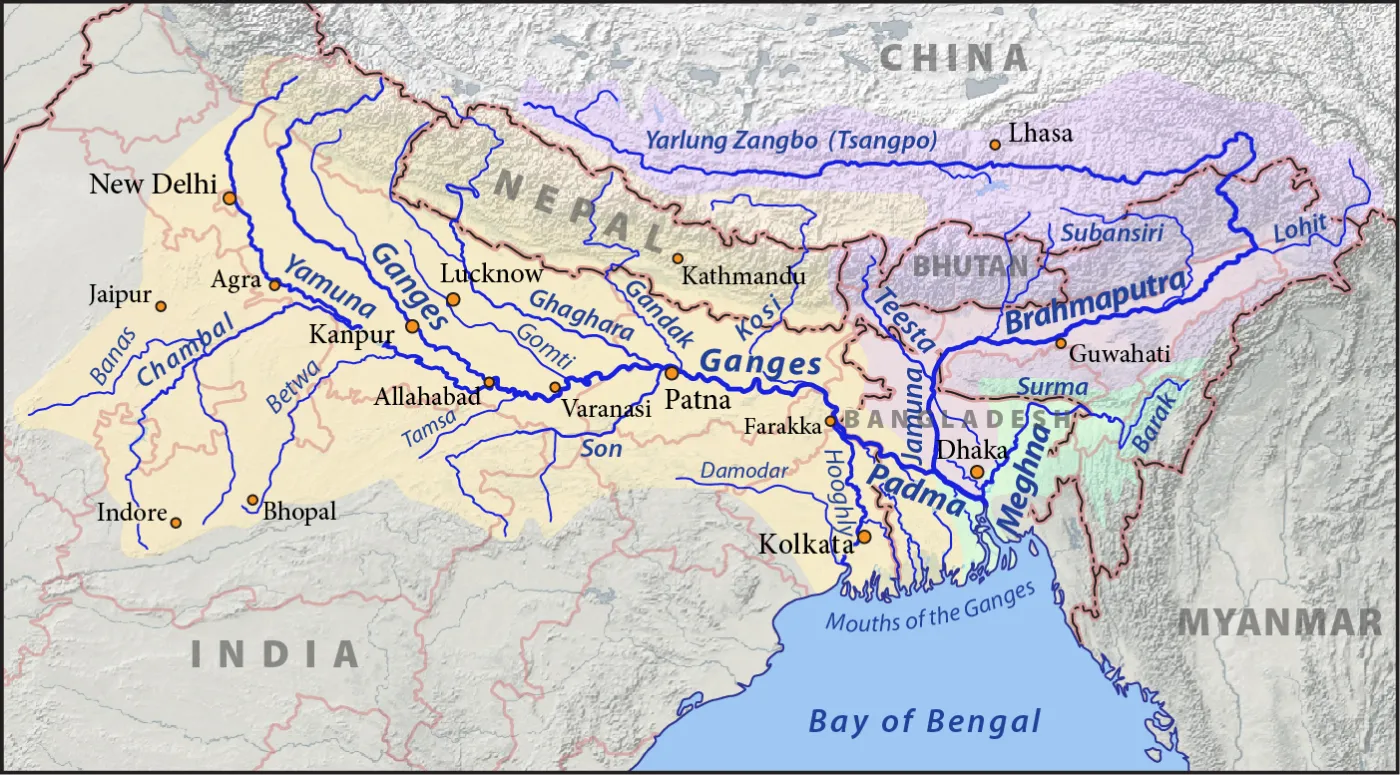
Few rivers change identity as often as the Brahmaputra. It rises in the Tibetan Plateau, where it flows east as the Yarlung Tsangpo, then makes a dramatic hairpin turn through one of the deepest canyons on Earth before entering India in Arunachal Pradesh as the Siang. Joined by the Dibang and Lohit, it becomes the Brahmaputra and spreads across the wide plains of Assam.
In Assam the river is so broad that it holds Majuli, one of the largest river islands in the world and a centre of Vaishnavite culture. Its annual floods renew the fertile soils of the valley and sustain wetlands such as Kaziranga National Park, but they also bring hardship to riverside communities. The river then turns south into Bangladesh, where it is called the Jamuna, and joins the Ganga to form the great delta.
The Brahmaputra has long been the lifeline of Assam – for transport, fishing, farming and culture. Its waters are also home to the Ganges river dolphin, and its tributaries drain some of the wettest regions of the Eastern Himalaya.
Tributaries
Subansiri, Manas, Dibang, Lohit, Kameng, Dhansiri, Teesta (in Bangladesh)