
Rivers, Mountains and Lakes
The Ganga: Course, Tributaries and Importance
Follow the Ganga from its Himalayan source to the Bay of Bengal, and learn why it matters for agriculture, ecology and c...
River
The Yamuna is the largest tributary of the Ganga, rising at the Yamunotri Glacier and joining the Ganga at Prayagraj.
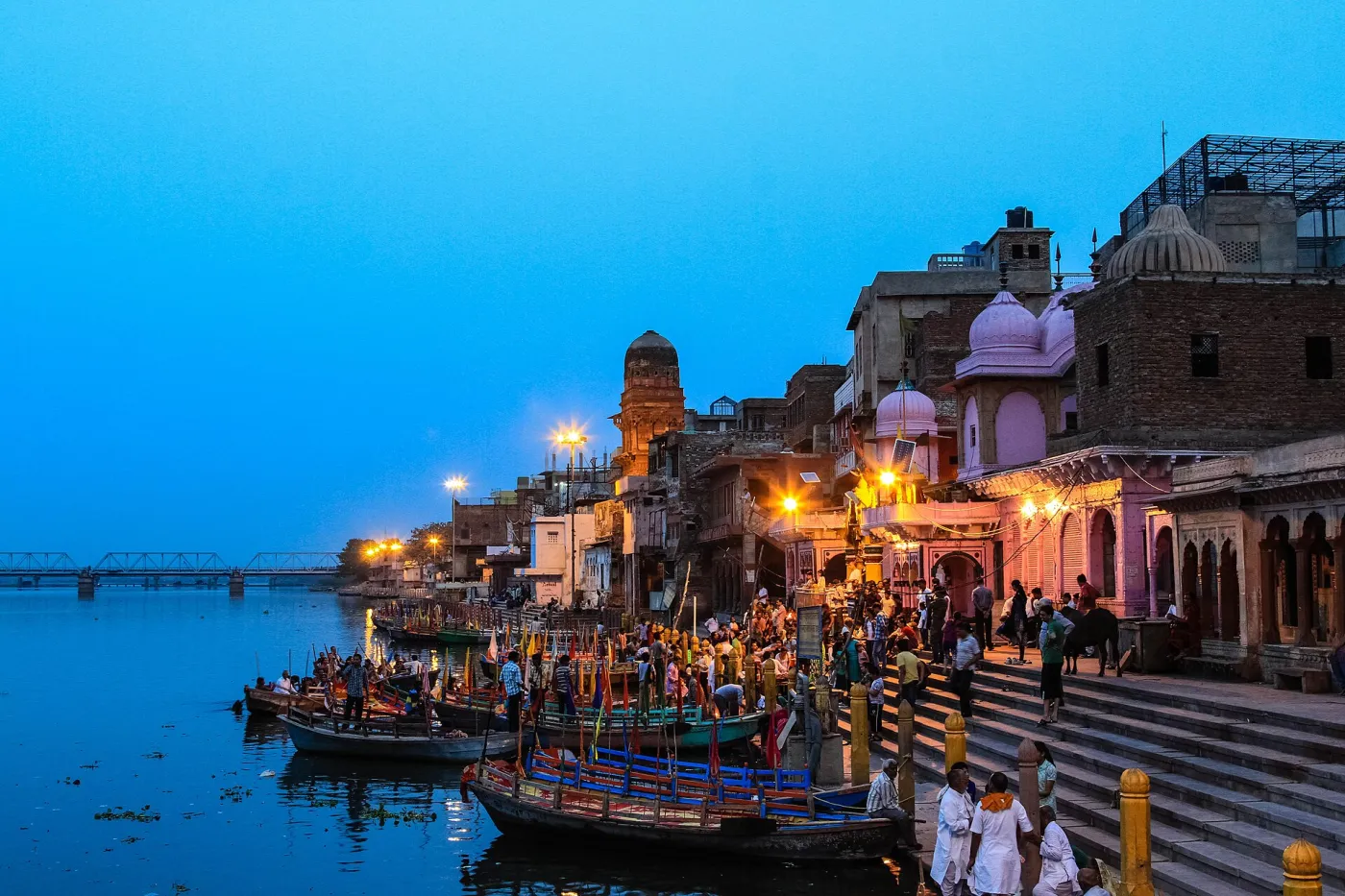
The Yamuna begins at the Yamunotri Glacier on the slopes of the Bandarpunch peaks in Uttarakhand, where pilgrims cook rice in the hot springs beside the Yamunotri temple. It cuts through the Shivalik hills, enters the plains near the border of Uttarakhand, Himachal Pradesh and Haryana, and flows south past Delhi, Mathura and Agra before joining the Ganga at Prayagraj.
The river has shaped some of India's most famous landscapes. Mughal emperors built the Red Fort in Delhi and the Taj Mahal and Agra Fort on its banks, and the towns of Mathura and Vrindavan along its course are closely associated with the life of Krishna. Its southern tributaries – the Chambal, Sindh, Betwa and Ken – drain much of central India.
The confluence with the Ganga (and, according to tradition, the invisible Saraswati) at Prayagraj is known as the Triveni Sangam, the site of the Kumbh Mela. Like the Ganga, the Yamuna faces heavy pollution, particularly as it passes through Delhi, and its cleaning is a long-standing national priority.
Tons, Hindon, Chambal, Sindh, Betwa, Ken
Follow the Ganga from its Himalayan source to the Bay of Bengal, and learn why it matters for agriculture, ecology and c...