Temples and Religious Heritage · Bihar, India
Mahabodhi Temple
The Mahabodhi Temple Complex at Bodh Gaya marks the place where the Buddha is believed to have attained enlightenment.
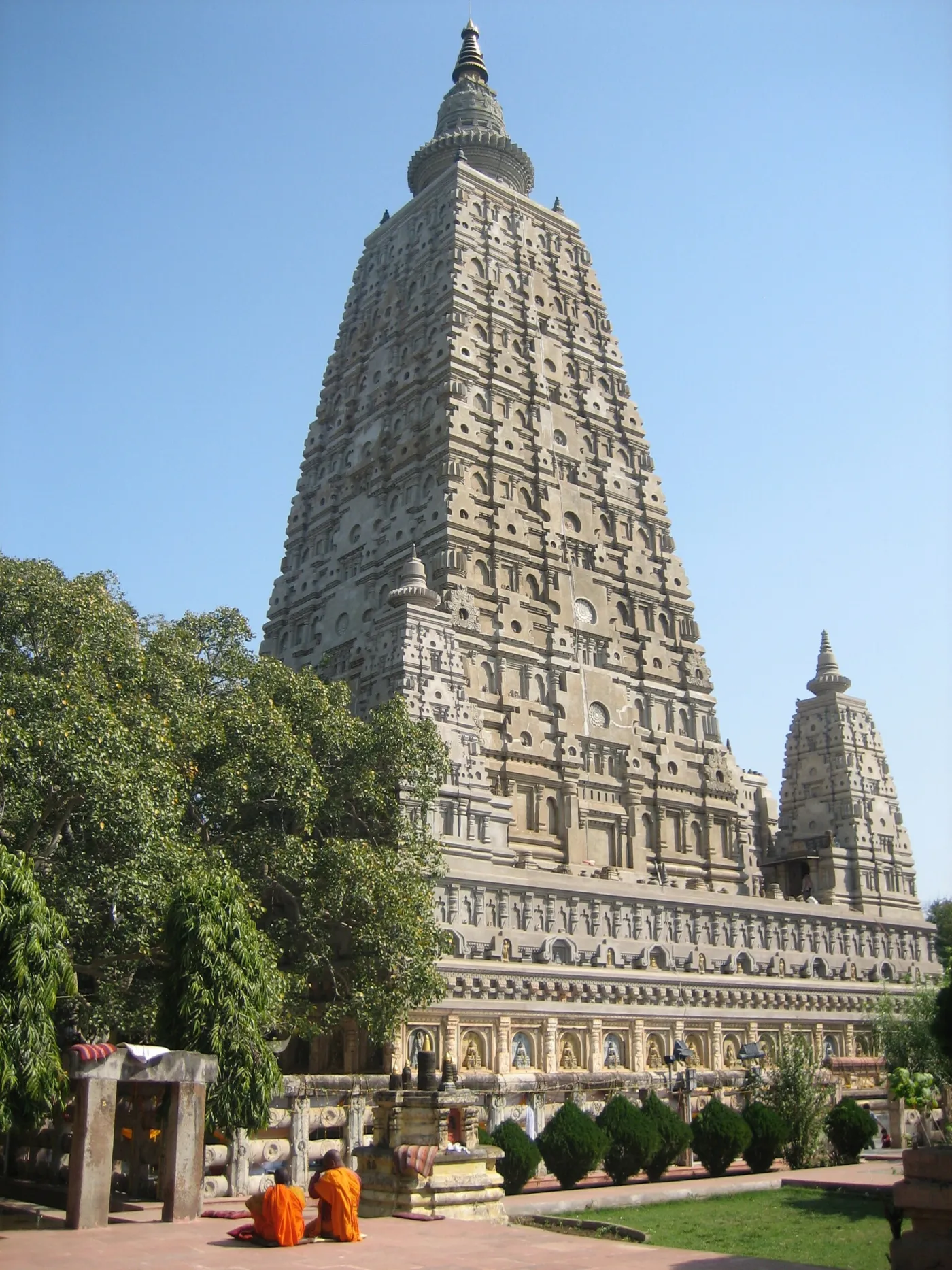
Overview
At Bodh Gaya, under a spreading peepal tree, Prince Siddhartha is believed to have attained enlightenment and become the Buddha. Today pilgrims from Sri Lanka, Thailand, Tibet, Japan and around the world sit in quiet meditation around the same spot, while monks chant and butter lamps flicker in the evening.
The Mahabodhi Temple's 50-metre brick tower rises above the Vajrasana, the "diamond throne" marking the place of enlightenment. Around it are stupas, the Animeshlochan Chaitya, the lotus pond and the meditation garden, and the town is dotted with monasteries built by Buddhist countries.
History
Emperor Ashoka built the first shrine here in the 3rd century BCE. The present temple dates largely from the 5th–6th centuries CE, in the Gupta period, and is among the earliest Buddhist temples built entirely in brick still standing in India. It was restored in the 19th century. The Mahabodhi Temple Complex was inscribed as a UNESCO World Heritage Site in 2002.
Significance
Bodh Gaya is the most sacred of the four main Buddhist pilgrimage sites associated with the life of the Buddha, along with Lumbini, Sarnath and Kushinagar.
How to reach
Bodh Gaya is about 15 km from Gaya Junction railway station and close to Gaya airport, which has seasonal international flights. Patna, the state capital, is about 110 km away. Autos and taxis run between Gaya and Bodh Gaya throughout the day.
Frequently asked questions
Why is Bodh Gaya important?
When was the Mahabodhi Temple listed by UNESCO?
Sources & references
- UNESCO World Heritage List – UNESCO World Heritage Centre (2002) , retrieved 10 Oct 2026 – Inscription year Reported