Historical Monuments · Agra, Uttar Pradesh, India
Taj Mahal
The Taj Mahal is a white marble mausoleum on the bank of the Yamuna in Agra, built by the Mughal emperor Shah Jahan in memory of his wife Mumtaz Mahal.
Overview
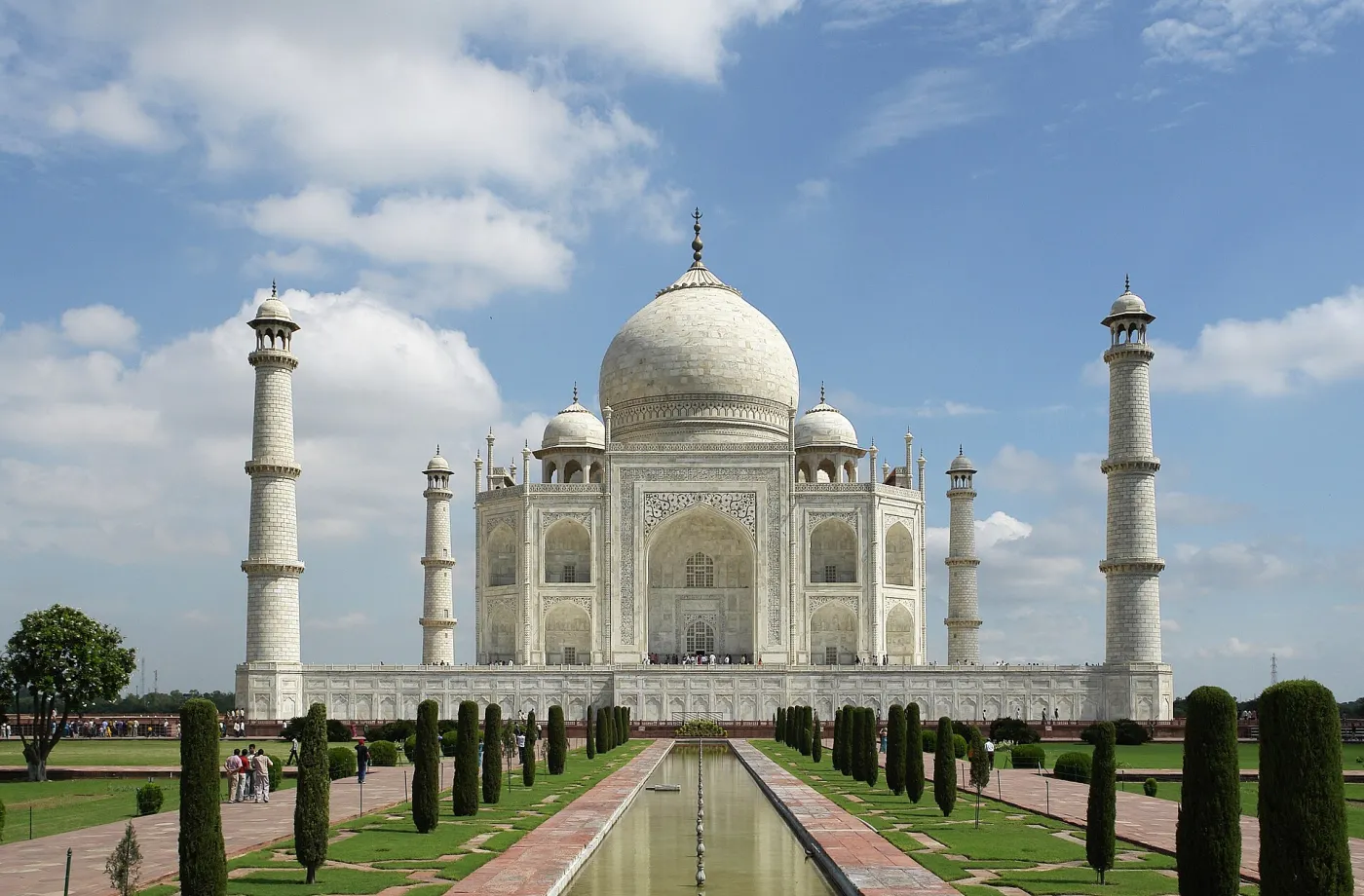
Arrive in Agra before dawn, walk through the red sandstone gateway, and the Taj Mahal appears all at once – a white marble mausoleum floating above the long reflecting pool, its dome shifting from grey to pink to gold as the sun rises over the Yamuna. Few buildings in the world are as instantly recognisable, and fewer still live up to the expectation the way the Taj does.
The complex is far more than the famous tomb. A formal Mughal garden (charbagh) divides the grounds into four quarters with water channels and walkways; a mosque and its mirror-image guest house (jawab) frame the mausoleum in red sandstone; and the great gateway is itself a masterpiece inscribed with verses from the Quran. Up close, the marble is covered with calligraphy and delicate pietra dura inlay – flowers and vines made of semi-precious stones set into the stone.
Give yourself at least two to three hours. Walk the full length of the gardens, look back at the tomb from the riverside terrace, and notice how the four minarets lean very slightly outward – a design choice usually explained as a way to protect the tomb if they ever fell.
History
The Taj Mahal was commissioned by the Mughal emperor Shah Jahan in memory of his wife Mumtaz Mahal, who died in 1631. Construction began soon after her death and the main mausoleum was completed in the 1640s, with work on the wider complex continuing for several more years. Thousands of artisans and craftspeople worked on the project, and materials were brought from across India and beyond.
Shah Jahan himself was later buried beside Mumtaz Mahal in the crypt – the only asymmetrical element in an otherwise perfectly balanced design. Over the centuries the monument survived periods of neglect, was restored in the colonial period, and today is protected and managed by the Archaeological Survey of India. It was inscribed on the UNESCO World Heritage List in 1983.
Significance
The Taj Mahal is regarded as the finest example of Mughal architecture, a style that blended Persian, Central Asian and Indian traditions. UNESCO describes it as a "jewel of Muslim art in India". It is also one of India's most visited monuments and a symbol of the country around the world.
Because air pollution can discolour the marble, vehicles are restricted near the monument and industries around Agra are regulated within a protected zone. Visitors can help by using the electric shuttles and following the site rules.
How to reach
Agra is well connected by rail – Agra Cantt is the main station, with fast trains from Delhi taking around two hours. The Yamuna Expressway links Agra to Greater Noida and Delhi by road. Agra has a small domestic airport, but most international visitors arrive through Delhi. Near the monument, vehicles must stop at designated parking areas, from where electric buses and golf carts run to the gates.
Related natural features
Frequently asked questions
Who built the Taj Mahal?
Is the Taj Mahal open every day?
When is the best time to visit?
When did the Taj Mahal become a World Heritage Site?
Sources & references
- UNESCO World Heritage List – UNESCO World Heritage Centre (1983) , retrieved 10 Oct 2026 – Inscription year Reported