National Parks · Assam, India
Kaziranga National Park
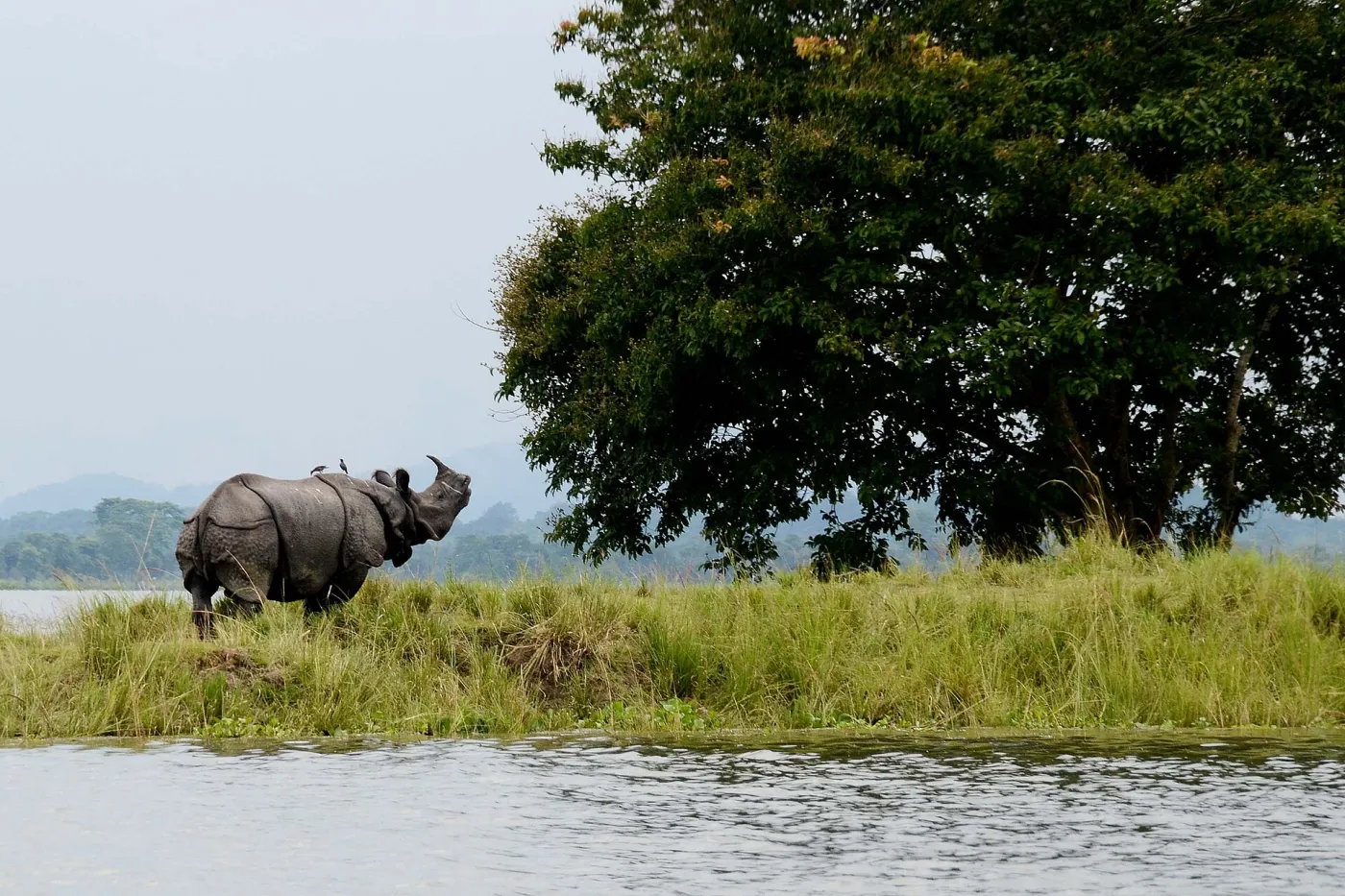
Kaziranga protects grasslands and wetlands on the Brahmaputra floodplain and is famous for the greater one-horned rhinoceros.
Overview
As the morning mist lifts over Kaziranga's tall elephant grass, the first shapes emerge: a greater one-horned rhinoceros grazing beside a pool, a herd of wild water buffalo, swamp deer, and perhaps a line of elephants crossing toward the Brahmaputra. Few places in Asia let you see so much large wildlife in a single morning.
The park is a mosaic of grasslands, wetlands (beels) and forests on the floodplain of the Brahmaputra, with the Karbi Anglong hills to the south. Jeep safaris operate in different ranges, and the park is also a rewarding destination for birdwatchers.
History
Kaziranga was first protected as a reserve forest in the early 20th century, when rhinoceros numbers had fallen dangerously low. It later became a wildlife sanctuary, was declared a national park in 1974, and was inscribed as a UNESCO World Heritage Site in 1985. It was also declared a tiger reserve in 2006.
Significance
Kaziranga holds the world's largest population of the greater one-horned rhinoceros, along with high densities of tigers, wild water buffalo and swamp deer – a celebrated conservation success.
How to reach
The nearest airports are Jorhat (about 95 km) and Guwahati (about 200 km); Furkating is a convenient railway station. National Highway 715 runs along the southern edge of the park, and safari bookings are made through the Assam Forest Department.
Related natural features
Frequently asked questions
What is Kaziranga famous for?
When is Kaziranga open?
Sources & references
- UNESCO World Heritage List – UNESCO World Heritage Centre (1985) , retrieved 10 Oct 2026 – Inscription year Reported